A good separation solves the problem before detection even begins.
Chromatography is more than just running a method on an instrument. The choice of column, mobile phase, and gradient determines whether components are truly separated, and therefore whether the final result is reliable.
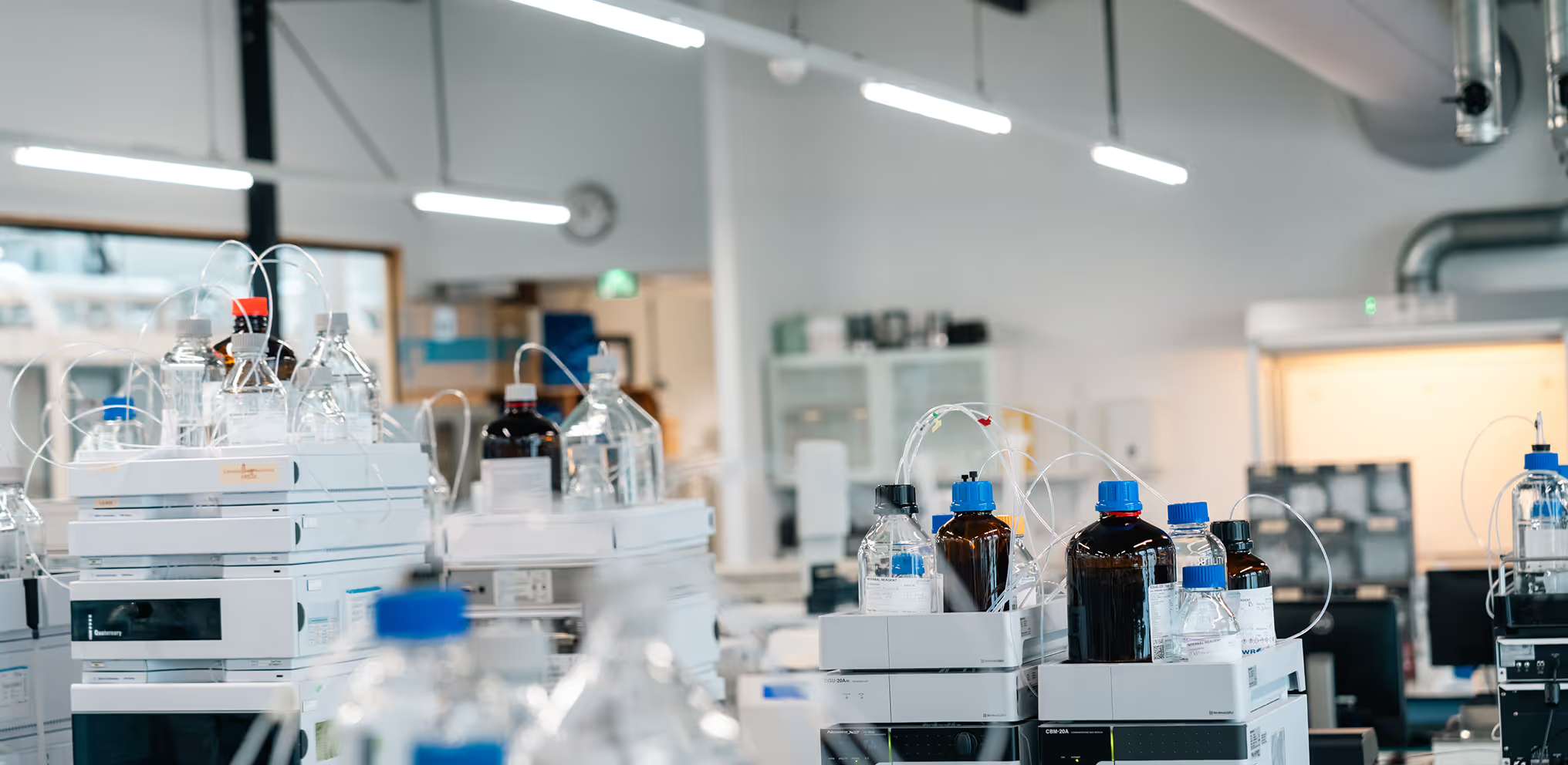
Chromatography is therefore relevant to every sector we serve.

Choosing the right technique is a field in itself.
Chromatography forms the backbone of our analytical capabilities, ranging from simple purity checks to complex multi-component analyses.
01
/
Matrix-dependent separation
The same compound may separate easily in one matrix while completely overlapping with interfering components in another. The method must be tailored to the matrix.
02
/
Sensitivity versus selectivity
Optimizing a method for maximum sensitivity sometimes comes at the expense of selectivity, and vice versa. The right balance depends on the analytical question.
03
/
Robustness over time
A chromatographic method must work not only today, but also after hundreds of injections, column changes, and years of routine use.

Expertise

Reliability

Flexibility

Partnership

From separation challenge to reliable chromatogram.
Our chromatographic approach is built on an understanding of the matrix and the target components, not on a standard method that happens to fit.
01
/
Analyzing the separation challenge
We begin by determining which components need to be separated, at what concentration level, and in which matrix. We examine the chemical properties of the target components and potential interferences. This forms the basis for selecting the chromatographic technique, column, and detection method.
02
/
Selecting the column and mobile phase
Based on the properties of the target components, we select the most suitable column chemistry and separation conditions. For LC, we optimize factors such as the mobile phase and pH, while for GC, the stationary phase is central. If necessary, we compare multiple columns to achieve the best selectivity.
03
/
Optimizing chromatographic conditions
We optimize parameters such as gradient, flow, temperature, injection volume, and analysis time. For GC, we develop a suitable temperature program and optimize injection conditions. The goal is a sharp, reproducible, and efficient separation of target components and relevant interferences.
04
/
Tailoring detection to the application
The detection method is selected based on the required sensitivity, selectivity, and the available properties of the target components. Depending on the application, techniques such as UV/PDA, FID, RI, MS/MS, ELSD, or others can be employed. Detector settings are optimized for reliable identification and quantification.
05
/
Method qualification or validation
Depending on the intended use, the developed method can be qualified as scientifically sound or fully validated. For pharmaceutical applications, validation can be performed in accordance with ICH Q2(R2) following a pre-approved protocol with established acceptance criteria. The method and results are fully documented, ensuring they are suitable for routine use or method transfer.

Sectors where method development is essential.

.avif)
Insights from our laboratory


Brightlabs at CPHI Milan
Meet Brightlabs at CPHI Milan. Brightlabs will be attending CPHI Milan from 6 to 8 October 2026. We would be delighted to discuss your analytical challenges and explore how our expertise in chemical and microbiological analyses can support your product development, quality control and market launch.

The complete overview of what Brightlabs does.
Download our brochure for a complete overview of our analytical capabilities, services, and scientific approach.